Tokyo / AI product studio

FROM PILOTTO PRODUCT

Adopting AI is no longer the hard part. What comes after it is. We take AI that is stuck in pilot and turn it into something people use every day. One team designs it, builds it, and teaches your people to run it.

Scroll

Somebody else said it

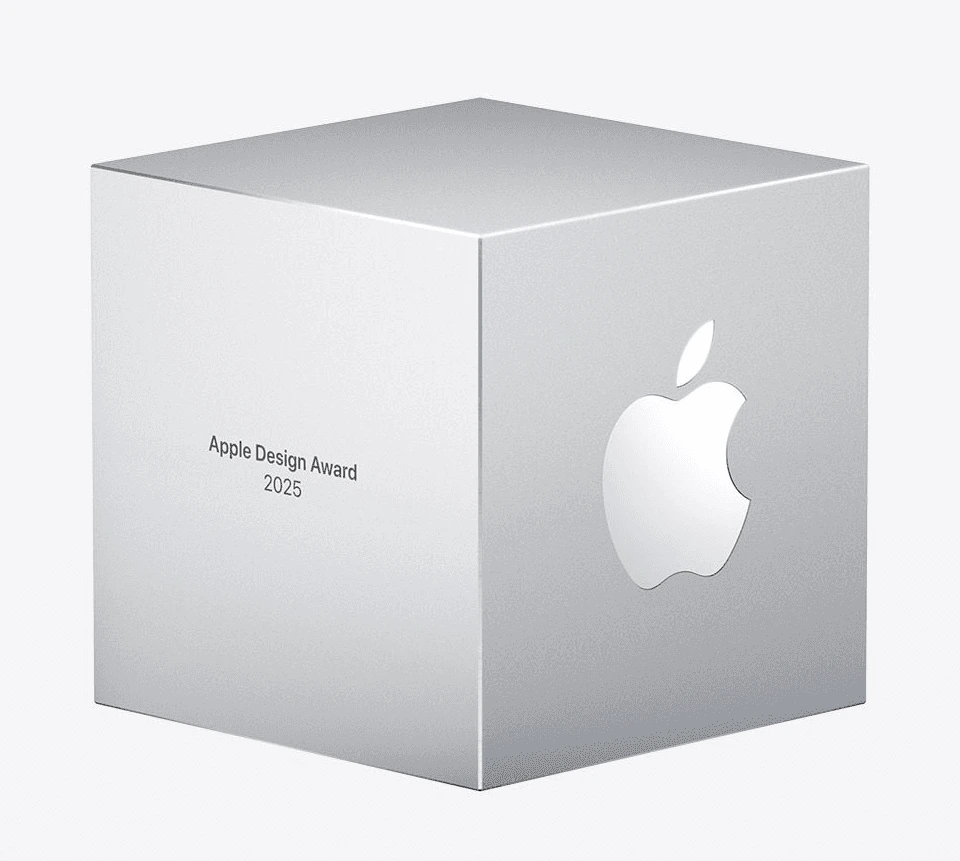
Apple Design Award 2025, Inclusivity.

Apple gives out a handful of these a year across the entire App Store. Ours went to our founder, for accessibility work on Speechify, software people use because reading the normal way does not work for them.

It sits this high on the page for one reason. Everywhere else here, we are the ones telling you the work is good. This is the part where somebody else said it, and the somebody else was Apple.

Category
Inclusivity
Year
2025
Product
Speechify
A solid aluminium cube. That is the shape of the trophy.

Where the market actually is

THEGAP

Adoption is done. Effect is the next problem.

A six country survey in spring 2026 found that 87% of large Japanese companies are using or rolling out generative AI. The United States sits at 90%, so on adoption there is barely a gap. The gap opens up right after. Only 9% of Japanese companies say the results clearly beat what they expected. In the United States that figure is 38%. So the missing piece is not the tooling. It is how the work gets rebuilt around it, how the effect gets measured, and whether the people using it ever got good at it.

The work we take on lives in the space between that 87 and that 9. It is not glamorous. It is also the only part that changes the outcome.

Source: PwC Japan, Generative AI Survey 2026 Spring, six country comparison, June 2026. 932 respondents at manager level or above in companies with revenue over 50 billion yen.

  1. 0%

    of large Japanese companies are using or rolling out generative AI

    US 90% / Korea 93%

  2. 0%

    say the results clearly beat expectations

    US 38% / UK 32%. Last of six countries

  3. 0%

    turned the gains into value staff or customers can feel

    US 75% / UK 74%

What we build

WHAT WEBUILD

Strategy, interface, code and training. One team carries it from the first conversation to the last handover.

01 AI PRODUCT

AI product design and build

The model is rarely the hard part. The hard part is everything around it. Which screen it appears on, which workflow it sits inside, who gets to see what, and how it behaves when it is wrong. Get that wrong and a strong model still goes unused.

  • Internal AI assistants
  • RAG and internal search
  • AI inside products you already ship
  • Moving a PoC into production
  • New AI features from scratch
02 AUTOMATION

Automation and AI agents

We turn manual work into systems that keep running. It starts by watching how the work actually happens, then automating only the steps where it pays. Projects that try to automate everything tend to stall halfway.

  • Mapping and diagnosing your process
  • Designing and building AI agents
  • Connecting internal tools and APIs
  • Document and data processing
  • Operations and continuous improvement
03 ENABLEMENT

AI enablement and training

Handing out licences changes nothing. We run everything from executive briefings that sharpen a decision, through hands on workshops for the people doing the work, to writing the internal guidelines. In Japanese and in English. Some of it qualifies for public training subsidies.

  • Executive AI briefings
  • Hands on workshops by department
  • Internal AI usage guidelines
  • Building repeatable working patterns
  • Support after rollout
04 BRAND & UI

Brand and interface

Design has been the day job for over 16 years. However much of this is about AI, the last thing a person touches is a screen. When that part is careless, everything behind it looks careless too. We do not treat it as decoration.

  • Brand identity
  • Website design and development
  • Product UI and UX
  • Motion and animation
  • Bilingual by design

How we work

CLEARWORKFLOW

Five steps, from the first conversation to the point where your team runs it without us.

  1. /01

    DIAGNOSEDiagnose

    We watch the real work and separate where AI pays from where it does not. Sometimes the honest answer is that you should not do this yet, and we will say so.

    About 2 weeks
  2. /02

    DESIGNDesign

    A working prototype, early. Arguing over a deck is slower than putting something in front of people and watching them use it.

    2 to 4 weeks
  3. /03

    BUILDBuild

    Production code, wired into the systems your company already runs on. Not a demo with a nice screen.

    From 4 weeks
  4. /04

    EVALUATEEvaluate

    We put a number on it. What got shorter, by how much, and did the quality hold. Anything you cannot measure, you cannot improve.

    Ongoing
  5. /05

    EMBEDEmbed

    We train the people who use it. Skip this and a good system quietly goes unused within six months. We finish when it runs without us.

    Ongoing

Selected work

SELECTEDWORK

Work that gets noticed, gets used, and moves the business. All three, or it is not finished.

About the studio

THESTUDIO

A small studio in Shinjuku, Tokyo. Small enough that the person you talk to is the person doing the work. Nothing gets lost in a handover.

The founder is Spanish, based in Tokyo, and has been doing design for over 16 years. We work in Japanese, English and Spanish. The useful part is the combination: an international standard of design, executed the way things actually get done in Japan.

Based in
Shinjuku, Tokyo
Founded
November 2024
Languages
Japanese / English / Spanish
Recognition
Contributed to a 2025 Apple Design Award winning project

Simple answers

SIMPLEANSWERS

We do not know where to start.

That is the normal starting position. Usually the first move is not picking a tool, it is looking at where the hours are actually going. The first conversation costs nothing, and it sometimes ends with us saying you are not ready for this yet.

Can we start small?

Yes, and we would rather you did. Pick one process and one team, get something working in a few weeks, measure it, then widen. It reaches scale faster than trying to launch everywhere at once.

Can we use public subsidies?

Often, depending on the work. There are programmes for AI and IT adoption at small and medium companies, and separate ones for staff training. The rules change every year, so we check the current version with you at the start.

Can you work in English?

Yes. Documents, meetings, training and deliverables come at the same quality in Japanese or English. We frequently pick up the reporting back to an overseas head office as part of the job.

How long does a project take?

A diagnosis on its own runs about two weeks. A working prototype takes one to two months. Through to a live rollout is typically three to six months, depending on scale and how tidy your data already is.

Can you do work that has nothing to do with AI?

Of course. Brand, websites, product UI and motion were the day job long before any of this. Those projects are very welcome.

Get in touch

STARTSOMETHING

Give us fifteen minutes and tell us what is not working. No pitch. If we are a bad fit we will tell you.

carlos@intdesign.jp

or

Shinjuku Dai-7 Hayama Bldg 3F, 1-36-2 Shinjuku, Shinjuku-ku, Tokyo 160-0022, Japan

We reply within two business days.